This was the last concert in the RPO’s ‘Lights in the Dark’ strand, here repurposed to encompass music by composers marginalised by gender expectations and/or issues of race and sexual preference. Some of the claims made for Dorothy Howell (1898 – 1982) are frankly silly: Leah Broad’s
Quartet
(Faber) ranks the composer, pianist and teacher alongside Ethel Smyth, Rebecca Clarke and Doreen Carwithen as one of four women who ‘Changed the Musical World’. To point out that they did nothing of the sort is not to say that
Lamia
is unworthy of revival. It is the work of an immensely promising student who, in 1918, was plainly familiar with Debussy, Strauss and Sibelius. The biggest influences on the score, at least as we hear it today, would seem to be Arnold Bax and Frank Bridge. Conductor Henry Wood, a man who lacked the conspicuous misogyny of his age when it came to the recruitment of orchestral players, also incorporated compositions by women composers at the Proms,
Lamia
being a special favourite and, in his years at the helm, something of a fixture. It was a surprise to find Vasily Petrenko treading in his footsteps (after one of his charming, not-quite-idiomatic spoken introductions). He certainly made the most of Howell’s imaginative and classy writing for wind and brass without necessarily finding much in the way of overall shape. A tendency to overstatement notwithstanding, this Keats-inspired symphonic poem remains fresh, and it is difficult not to attribute at least some of its neglect to misogyny. That said, the Black Country is still not the ideal milieu for a anyone looking to make a career in the arts.
Despite the attention she now attracts I have never been able to muster much enthusiasm for the music of adoptive Chicagoan Florence Price (1887 – 1953). Her idiom shows little of Howell’s awareness of contemporary trends, a comparatively dated Dvořákian style rendered spottily distinctive by the deployment of the African-American ‘Juba’ dance form. This precursor of the cakewalk has complicated associations however (slavery, minstrelsy and the like), a legacy which, for me, Price’s simplistic partying does nothing to query or ameliorate. That said, the Piano Concerto of 1934, its original full orchestral score rediscovered only in the last few years, has some distinctive ideas which the Royal Philharmonic articulated with efficiency. Applause between sections (the Concerto is not meaningfully in one movement) threatened to drown out the score’s highlight, a central Adagio whose main idea hints at something deeper and bluesier. A tender oboe and piano duet as much as a ‘real’ concerto movement, it goes nowhere but felt over too quickly on this occasion.
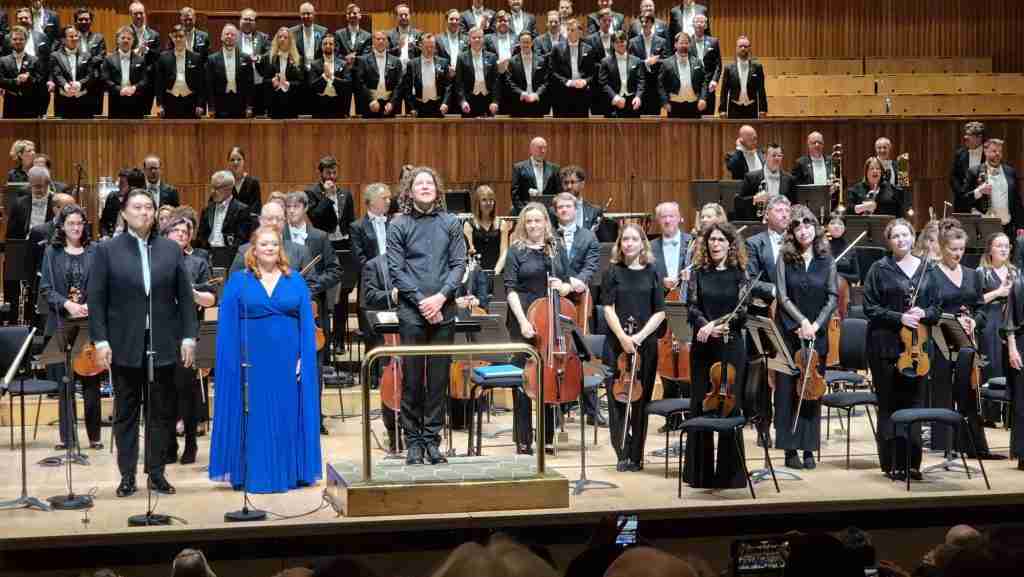
Resplendent in emerald green, Jeneba Kanneh-Mason played with her usual dedication and eloquence, having introduced the music to many listeners in many places. Despite bad behaviour (mobile phones, dropped beakers, unidentified gurgling and more), the present audience was rewarded with an unlikely encore, the finale of Prokofiev’s Seventh Piano Sonata. While the pianist presumably wanted to demonstrate her ability to tackle an established masterpiece, its inclusion also showcased Price’s paucity of invention, lack of drive and inability to modulate. There was some shallowness of tone too, but Grigory Sokolov’s titanic sonority is not the only way to go in music; Mikhail Pletnev for one interprets with less weight and velocity than Jeneba Kanneh-Mason.
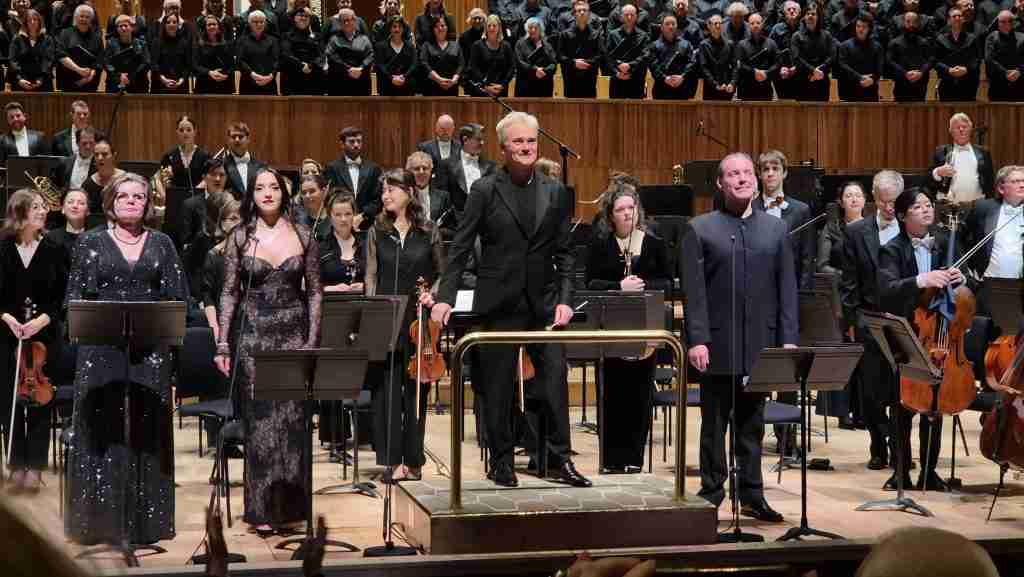
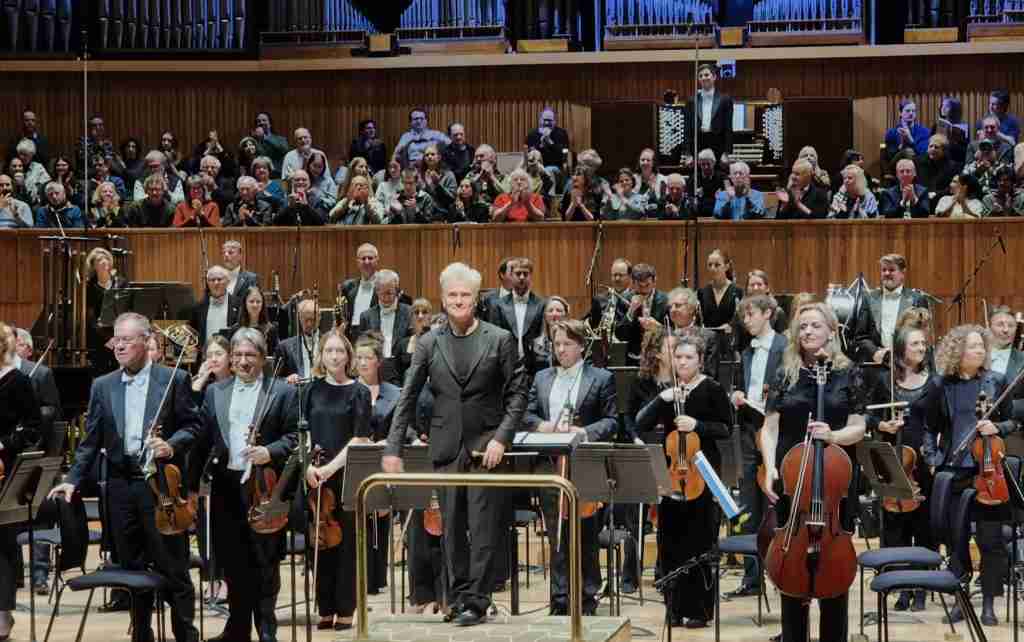
After the interval we moved on to Petrenko’s core repertoire. This was a comprehensively rethought, fiercely articulate, fast-flowing Tchaikovsky 4, full of dramatic hairpin dynamics (shades of Mariss Jansons) and unsuspected linear workings. The first movement sounded subtly different with the right kind of nervousness present and correct but less room for heart-on-sleeve emotional spasm, the material unfolding in longer phrases at all levels of the texture. The Andantino was indeed eloquently played (a busy night for the oboe) yet, again, never over-saturated with feeling. What remained was simply astonishing. The pizzicato strings of the third movement displayed ideal flexibility and unanimity at pace while the contrasting woodwind-led trio had the authentic rawness of the old Leningrad Philharmonic or some hyper-brilliant klezmer band. The finale, following without a break, was the ultimate white-knuckle ride, breathtakingly crisp, almost but not quite too fast for the inspired players of a vastly improved band. The closing bars upped the ante still further with a flamboyant old-school accelerando. Sensational stuff and a partial standing ovation!
←
音乐会评论
关于此网页
This was the last concert in the RPO’s ‘Lights in the Dark’ strand, here repurposed to encompass music by composers marginalised by gender expectations and/or issues of race and sexual preference. Some of the claims made for Dorothy Howell (1898 – 1982) are frankly silly: Leah Broad’s