The memory of the LSO with its then music director Simon Rattle in concert performances of
Kát’a Kabanová
last year, separated by Covid from
The Cunning Little Vixen
in 2019, still looms large (and the recording is due for release in February on the LSO Live label), and this year’s Janáček opera
Jenůfa
is in the same league. Let’s hope that the LSO and its (now) Conductor Emeritus move on to the other Janáček operas – he plays to Rattle’s and the LSO’s strengths.
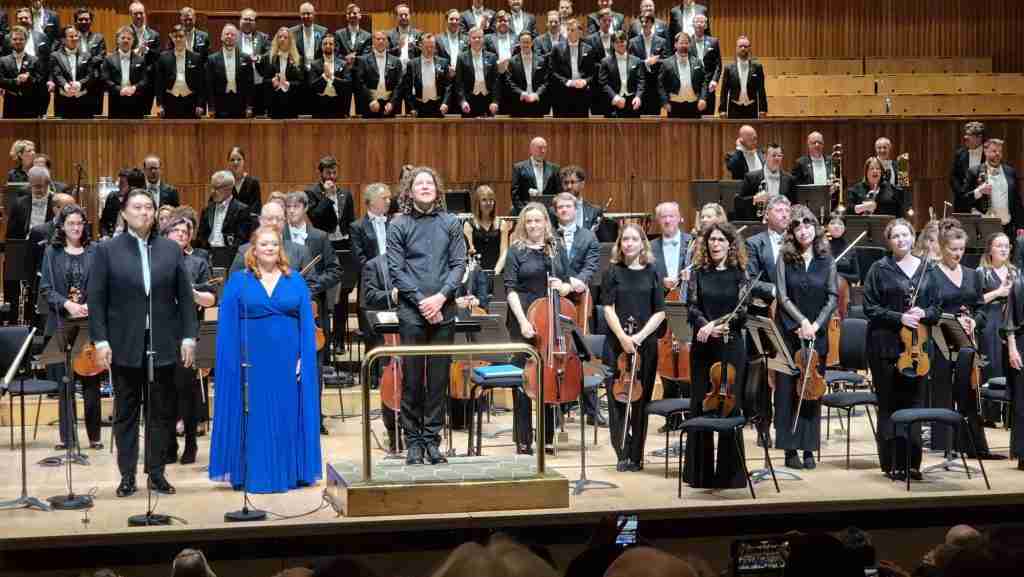
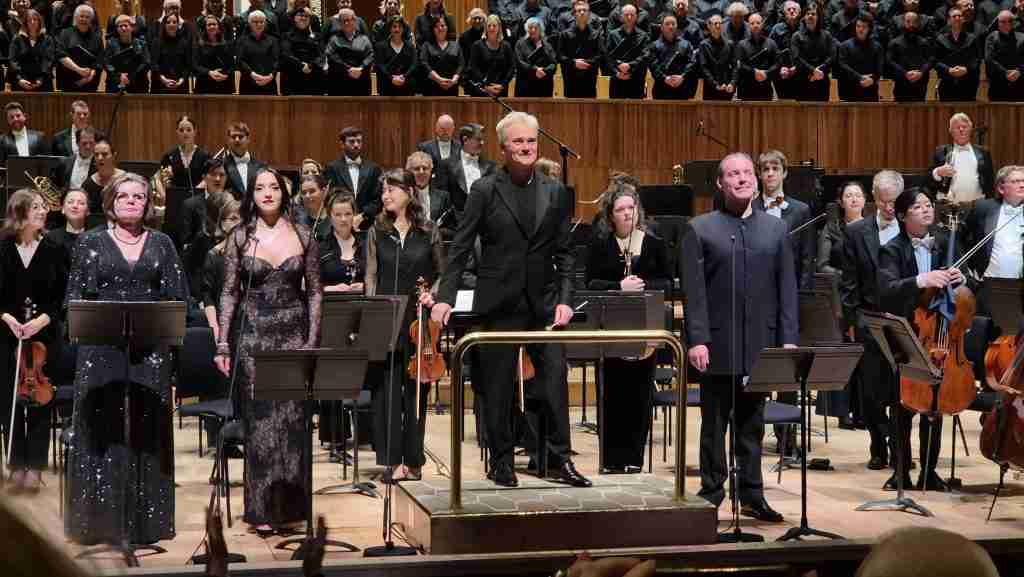
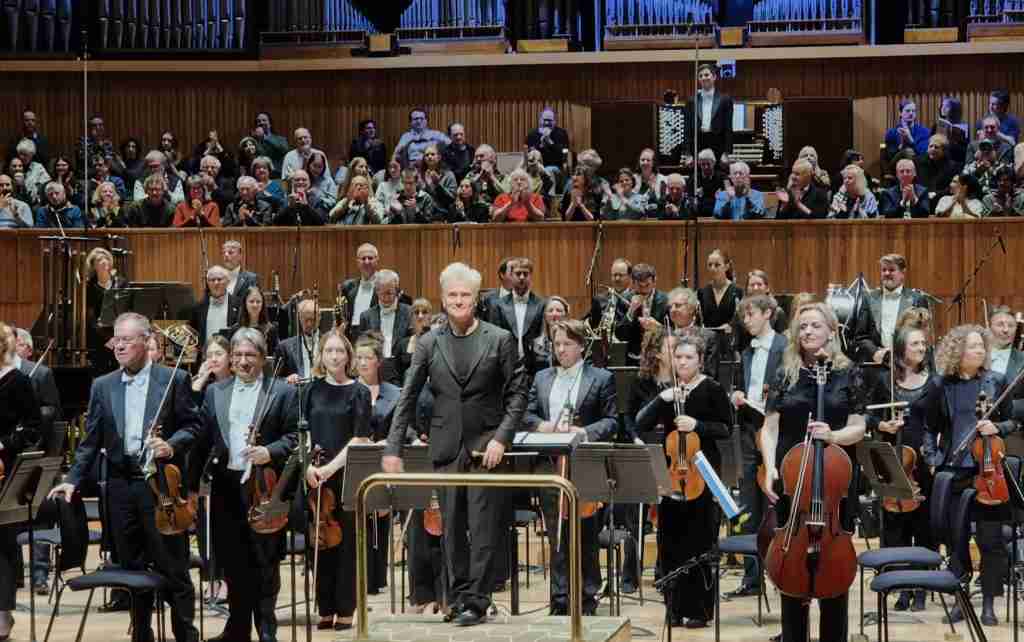
With orchestra and chorus members crammed on stage, the cast was noticeably restricted but still seemed only lightly attached to their scores, the four leads in particular. It also had the effect of heightening the opera’s claustrophobic nineteenth-century Czech village setting, with its extended, dysfunctional family of step- and half-siblings and relations, offering a narrow-minded background of violence, jealousy and greed barely contained by equally limiting religious propriety. In its homeland the opera is still known by the original play’s title, translated as ‘Her step-daughter’ – that is, the Kostelnička’s (the unnamed sacristan who looks after the village church) step-daughter Jenůfa – which is more faithful to the opera’s double-act of the stern and righteous Kostelnička, an unassailable moral force who takes her love and ambitions for Jenůfa to wicked extremes when she drowns the latter’s illegitimate child, but the roles of victim and redeemer are miraculously reversed, something that Rattle and his forces communicated with devastating results.
The Swedish soprano Agneta Eichenholz (replacing Asmik Grigorian) rather undersold Jenůfa’s terrible anxiety over her pregnancy, which opens the opera, beautifully established by the orchestra’s neutral opening of the mill-wheel carelessly turning, but voice and character bloomed with spontaneity and depth as Act One moved on to the confrontations with feckless Števa, the father of her unborn child, and his half-brother Laca, who loves her without hope. Eichenholz came into her own in Act Two, singing her prayer to the Virgin Mary – how I wish that Janáček had completed this lovely Salve Regina – as a wonderful glow of vulnerability and faith, and responding to her step-mother’s lie about the death of the newborn child with unforced innocence and acceptance. This was Katarina Karnéus’s great moment as the now fatally compromised Kostelnička. Karnéus may not have that shredding wail in her voice that so completely expresses the role’s diminishing control, but it was quite something to witness her crumbling composure. I’ve often wondered if Britten knew this opera – the close of Janáček’s Act Two bears similarities to Billy Budd’s death-sentence music.
The tenors Nicky Spence (Števa) and Aleš Briscein (Laca) have long distinguished themselves in both step-brother roles. Spence’s drunken Števa was a stunningly sung and astutely acted display of brainless male aggression, and his wretched abandonment of Jenůfa in Act Two was pitch-perfect. Briscein made Laca’s disfigurement of Jenůfa at the end of Act One dismayingly credible, and his top voice rose gloriously to the occasion in Laca and Jenůfa’s redemptive triumph.
The smaller roles were all strongly sung – a touching Grandmother Buryjovka from Carole Wilson, a thrilling Jano from Erika Baikov neatly setting up Jenůfa’s generosity of spirit, a formidably self-satisfied Mayor’s family from Jan Martinik, Hanna Hipp and Evelin Novak (as spoilt daughter Karolka, who luckily escapes Števa’s predatory ambitions), and a characterful and charming Barena from Claire Barnett-Jones. Released from the pit, the LSO sounded more rather more luxurious than astringent in Janáček’s brilliantly realised score, but it and Rattle delivered the music with unswerving devotion and there were notable, idiomatic contributions from the LSO’s new leader Benjamin Gilmore. This too will be released on LSO Live.
←
音乐会评论
Sir Simon Rattle conducts the LSO in Janáček’s Jenůfa, with Agneta Eichenholz, Katarina Karnéus, Aleš Briscein and Nicky Spence
The memory of the LSO with its then music director Simon Rattle in concert performances of