For her new production of
Carmen
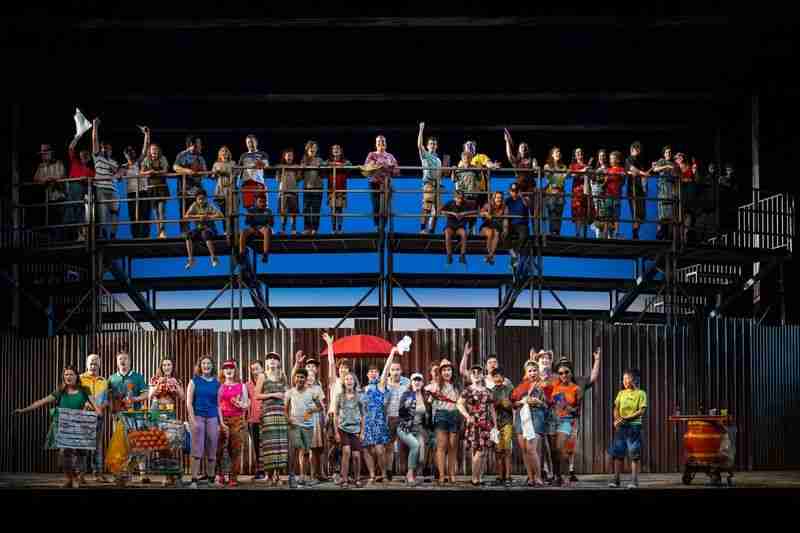
for Glyndebourne, Diane Paulus indicates that she aims to concentrate on Don José’s psychology and backstory. But as is increasingly the case with productions of the opera, it does so by focusing just as much on the outward political or social system in which the central protagonists find themselves caught up in as victims – perhaps somewhat curiously since, although Bizet’s opera so masterfully evokes a sense of place (Seville) in his music, the libretto itself is almost entirely devoid of politics. Despite mentioning the recent protests for greater women’s rights in Iran, Paulus says she avoids ‘zeroing in on any particular political situation or country’, though the graffiti in Spanish and menacing military presence in Act One strongly suggest a Latin American junta. There are tantalising incursions into this tyranny from an apparently freer world beyond, when two oikish Western tourists briefly pass by, no doubt seeking a voyeuristic glimpse of an otherwise closed off, pariah state; and Micaëla is a Red Cross worker. Elsewhere the settings are more general: Lillas Pastia’s bar is a dingy underground nightclub that could be some shabby chic establishment in Shoreditch or Dalston as much as any favela, and the bare stand and corrugated tin walls constitute a rather makeshift bullring at the end, all suggestive of poverty.
After Act One the politics generally recede into the background, though a small girl is the first to appear from the bullring to see Carmen’s murdered body, just as some children are menaced by the soldiers in the very first scene, making a sociological comment on the perpetuating cycle of violence, fear, and tyranny in this community, out of which Carmen came and failed to escape. Against such a backdrop, the taunting, obsessive relationship between her and Don José comes to the fore instead, quite precisely and consistently observed to make the production far more engaging at that personal level, and more effective than the recent new production by Damiano Michieletto for the Royal Opera House, whose aims and ethos are very similar. (Aigul Akhmetshina from that cast will appear as the alternate Carmen for Glyndebourne’s performances in August.)
Certainly Carmen exercises as much agency – with the means she knows best – as is possible within this oppressive system, and also pointedly gestures in defence of, or hope for, ‘la liberté’. But arguably it limits the wider agency of what the idea of Carmen’s character represents – her emotional and sexual autonomy – by instrumentalising her role in a more utilitarian way as some freedom fighter, acting under political or social duress, as though her flighty and capricious nature might be dampened down once the revolution is finished. After all, she seems entirely willing to perform a dance privately for Don José, even after he has been demoted from the already low status of corporal and she has demonstrated what erotic hold she can have over him, without having to prove herself to him, her factory colleagues or the other soldiers again.
Despite Carmen’s sassy behaviour, Rihab Chaieb’s singing has a conventional, understated attraction, bordering on anonymity, a few striking climaxes aside. Passion – both romantically charged and desperately manic – is left to Dmytro Popov’s persuasive Don José with his Italianate, eloquent tenor. Dmitry Cheblykov is a darkly charismatic Escamillo, when his tuning settles down from its initial imprecision on his excitable first appearance at the nightclub, where he is conceived more as a boxer, or even as a drug baron or pimp with his bared tattooed chest and gold chains. Sofia Fomina evinces a freshly minted charm as the dutiful Micaëla, compared with which Elisabeth Boudreault and Kezia Bienek are cheekily vivacious as Carmen’s friends Frasquita and Mercédès. Loïc Félix and François Piolino also make characterful contributions as the smugglers Dancaïre and Remendado.
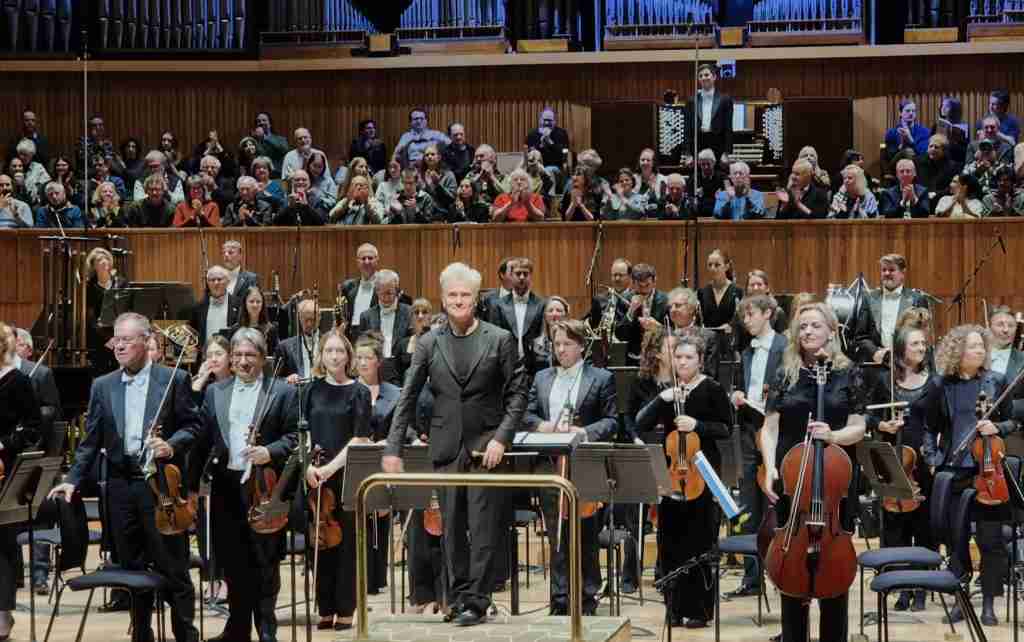
Robin Ticciati tends to draw bold colours and contrasts from the London Philharmonic, even if the depiction of dawn in the entr’acte before Act Three is lacklustre. Although some inner instrumental details are eccentrically emphasised, the music generally rescues any sagging tension that the performance falls into on account of using a version of the score with spoken dialogue instead of sung recitatives. If the production succeeds in placing the central relationship within an emotionally and socially intelligible setting, it does so at the cost of flattening out Carmen’s luridly wayward character, who in Bizet’s original conception is genuinely free, transcending any political or social confinements, rather than troubling herself with the inconvenience of campaigning within one system to find herself within another.
Further performances to June 17, and then between August 1 & 24 with an alternative cast & conductor
.
←
音乐会评论
2024年格林德伯恩歌剧节——比才歌剧《卡门》——主演:里哈布·夏恩、德米特罗·波波夫、索菲娅·福米娜和德米特里·切布利科夫;导演:黛安·保卢斯;指挥:罗宾·蒂恰蒂
For her new production of