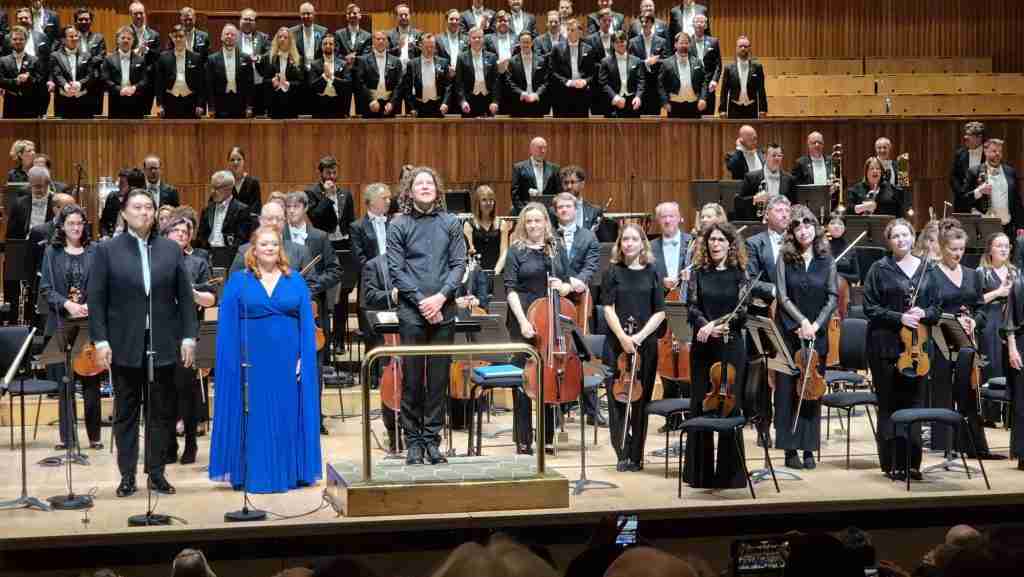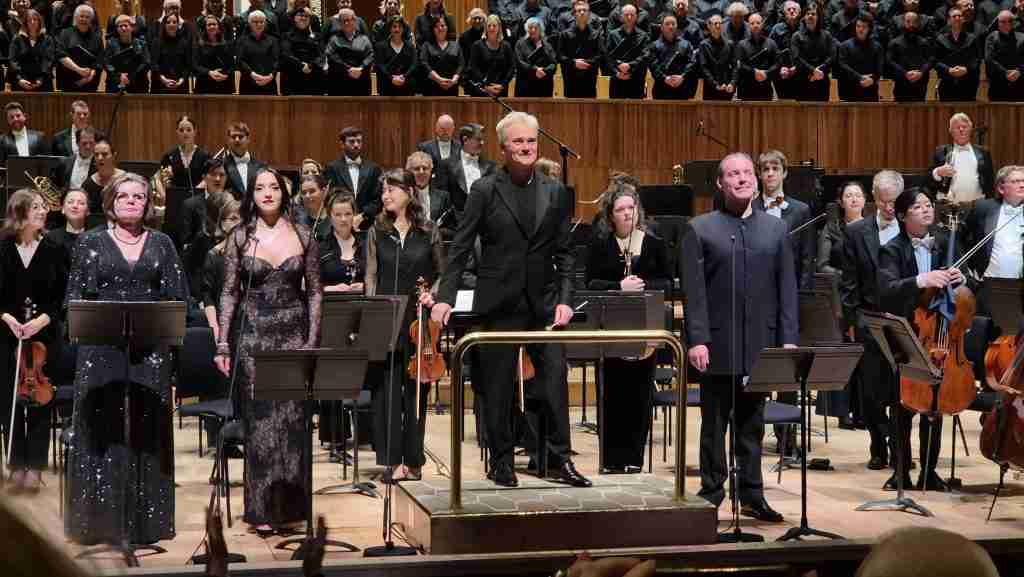
A respectable turnout greeted this quietly audacious programme. We began with the only item likely to be familiar to mainstream concertgoers whatever the variability of its line-up. The BBC Singers, who might have been joining the orchestra in any number of guises, impersonated the 16-star soloists required to deliver ‘the composer’s ravishing original version’ as promised in the BBC’s advance publicity. Tempos were mainstream, the orchestral texture generally bright and translucent, the singing variable.
Composed some twenty years after John Foulds’
Dynamic Triptych
, a previous Oramo reclamation for piano and orchestra, Doreen Carwithen’s Concerto proved less worthy of revival even after as many as three commercial recordings. An early utterance of considerable ambition, ‘alternating a percussive toccata-like style with out-and-out romanticism’ according to the
Musical Times
of the day, it made something of a splash when heard at the Proms, once only, in 1952. It was played then by Iris Loveridge. Alexandra Dariescu, her contemporary successor, proved no shrinking violet, thwacking the keyboard at times as if determined to make an impact however thin the material. Carwithen begins with a certain astringency – Vaughan Williams in Bartókian vein or Bloch’s Concerto Grosso No. 1 perhaps– before lapsing into pastoral meandering and Rachmaninov-without-the-tunes lushness. The influence of Walton is less apparent than in the film music. There are a lot of scales and stock gestures throughout. No tunes. At the heart of the piece, a would-be-affecting slow movement includes several passages for solo violin some have found Celtic in inspiration but one waited in vain for something hummable. The finale settles for John Ireland and a welter of generic flourishes, making the half-hour total timing feel long. The previous neglect of Carwithen’s concert music would seem to relate less to the misogyny of programme planners than her own single-minded devotion to William Alwyn as student, paramour, wife and widow. Tonight’s audience seemed in two minds about her Concerto. Then again, attendees had taken an age to settle in the Vaughan Williams.
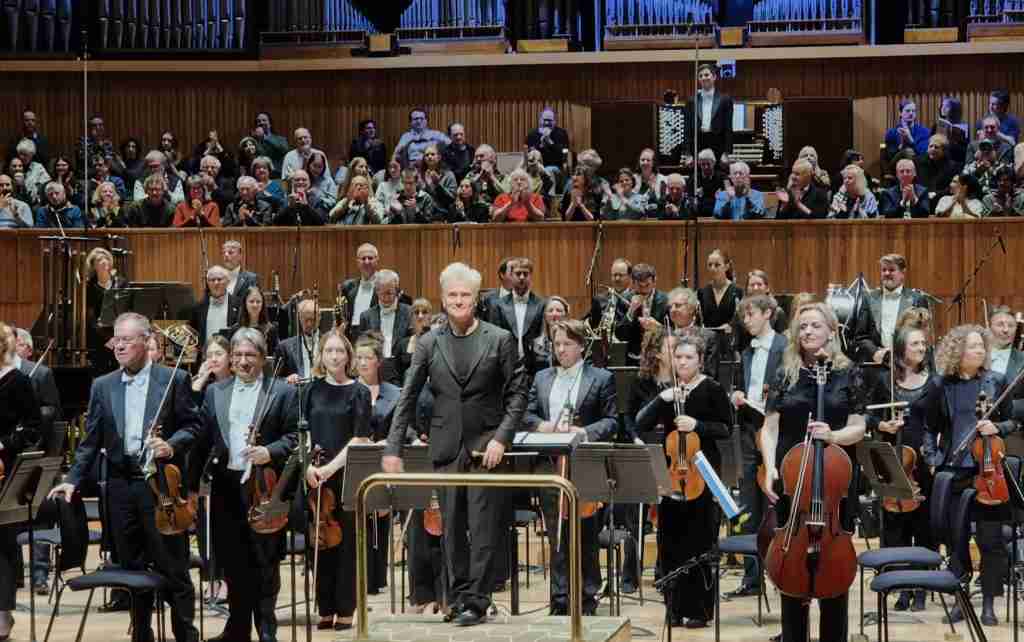
It was the Arnold which had everyone listening with rapt attention. Oramo championed the Fifth Symphony at a Prom some years ago, so it is evidently a work he holds in high regard. Now reunited with his baton, he led the tightest, most ardent account imaginable. While the composer’s cycle of nine chronicles an increasingly tragic, bipolar, alcoholic life, the Fifth, written in 1960-61, is also associated with the premature passing of close friends. The shades of Jack Thurston (clarinettist), Dennis Brain (horn player), David Paltenghi (choreographer) and Gerard Hoffnung (tuba player and humourist), join encrypted material honouring Hoffnung’s widow, Annetta. On this occasion the structurally elusive first movement glowed, tinkled and blazed to unsettling yet somehow cogent effect. Like the rest of the work, it is scored with brilliant originality as well as Pinewood professionalism. Arnold’s glittering combination of bells, harp glockenspiel and celesta is something very special, and the biographical element strikes home when you can see those other key instruments, not least Hoffnung’s tuba, in action. There is also an unsuspected spatial element to the processional which the Barbican’s often problematic acoustic for once did not blunt. The polish of the playing was spectacular.
On to the
Andante con moto – Adagio
slow movement, launched with a ‘sentimental’ semi-commercial / quasi-Mahlerian theme for strings alone. This was played by the strings of the BBC Symphony Orchestra with their amplest tone and then very quietly indeed, with the utmost sensitivity, at the close. The idea is thrust back into the limelight near the very end of the Symphony, weirdly unmotivated triumph preceding an abrupt and dismaying collapse not easily brought off in performance. In negotiating the emotional zigzags of the rest, from roguish ‘Flash Harry’ lolloping to Anglicized Shostakovich (the opening movement of the Fifteenth Symphony anticipated rather than echoed in Arnold’s finale), Oramo did as well as anyone ever has or is likely to. Big claims have been made for the score, held aloft by the conductor at the close. Perhaps they are justified after all. This was a sensational revivification.
This concert will be broadcast on BBC Radio 3 on Tuesday 22
nd
April 2025.
←
音乐会评论
关于此网页
A respectable turnout greeted this quietly audacious programme. We began with the only item likely to be familiar to mainstream concertgoers whatever the variability of its line-up. The BBC Singers, who might have been joining the orchestra in any number of guises, impersonated the 16-star soloists required to deliver ‘the composer’s ravishing original version’ as promised in the BBC’s advance publicity. Tempos were mainstream, the orchestral texture generally bright and translucent, the singing variable.