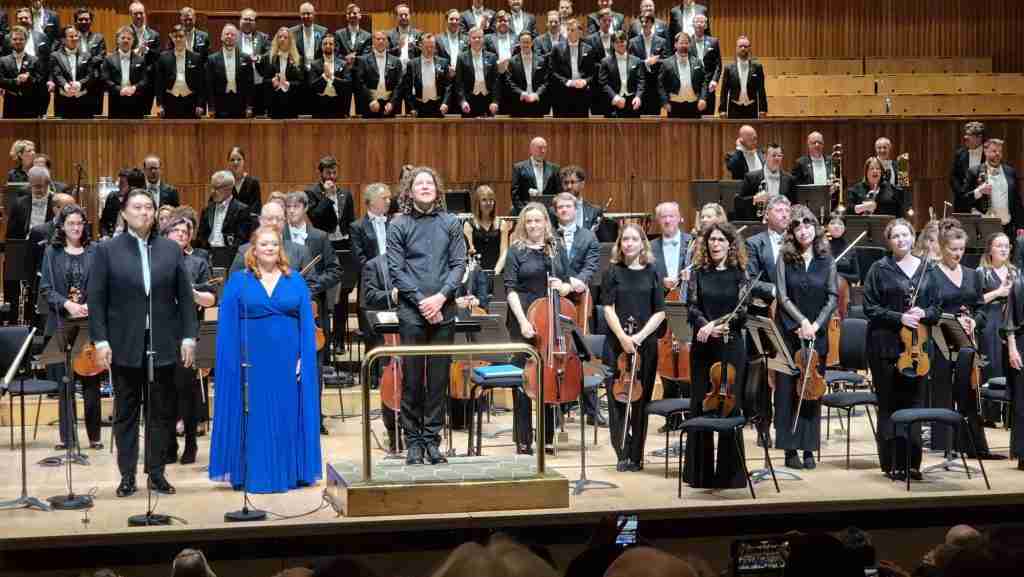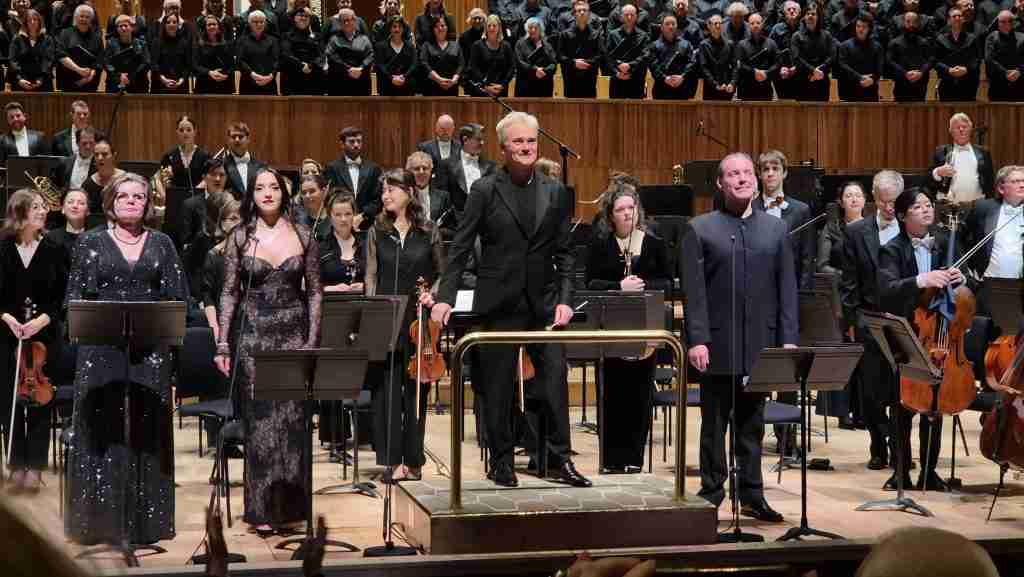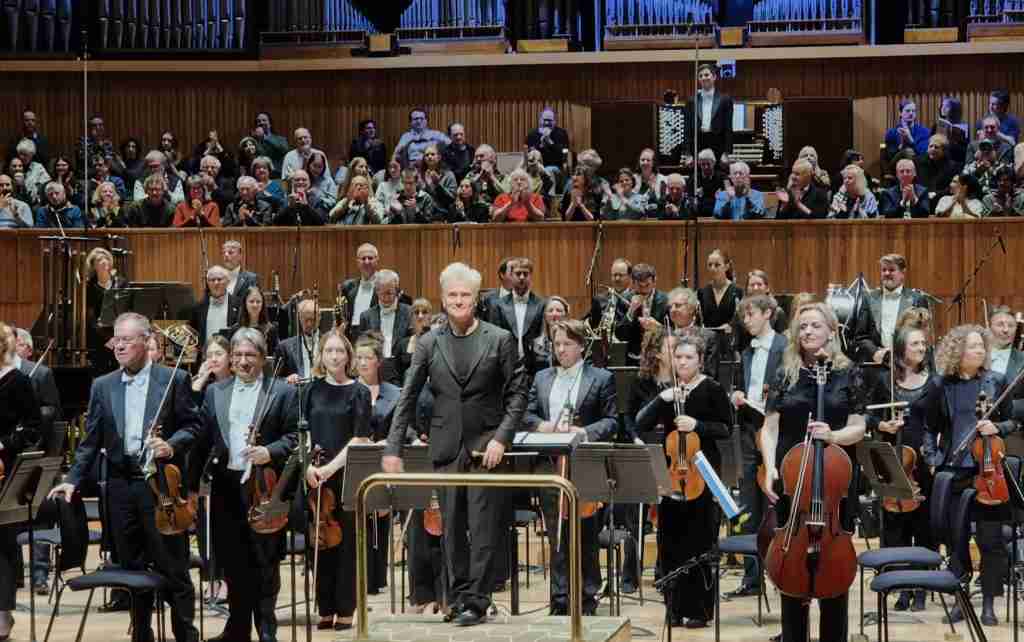
While Vasily Petrenko has won critical plaudits for much of his work with the Royal Philharmonic Orchestra, their current programme strand, ‘Lights in the Dark’, finds the team on a roll. Houses have been gratifyingly full though less so on this occasion with the rows flanking the organ console almost empty. Hard on the heels of pianist Yunchan Lim last Tuesday, today’s matinee showcased a former Wunderkind who spends as much time teaching and conducting as playing. The prospect of hearing Maxim Vengerov revisit the familiar Sibelius Concerto was nonetheless intriguing given that he has also championed the composer’s earlier, 1903-4 version in London. Remarkably few top-flight virtuosi have done likewise (in much the same way that the totality of Sibelius’s output for violin and orchestra has been recorded by Christian Tetzlaff and James Ehnes but few other big names). With the fiftyish Vengerov favouring a sober, earth-rooted Oistrakh-style posture, the old flamboyance was perhaps less in evidence than the awesome technique. Here was a big, solid player for the largest of halls, just as well given the extreme remoteness of my own perch. Vengerov’s warm insistent vibrato was given freer rein in the surprise, orchestrally accompanied encore, the slow movement of Henryk Wieniawski’s Second Violin Concerto, gloriously done.
Strauss’s
Don Juan
came first, almost as impressive as
Eine Alpensinfonie
last week when microphones were out in force for what will presumably be a Harmonia Mundi recording or patching session. Not so this time. Amid a welter of carefully sculpted detail there was no lack of passion. That said, Petrenko is not as powerful as some in this score, zeroing in on its subtler aspects much as he did in Stravinsky’s
Firebird
(the complete ballet) after the interval.
Don Juan
’s startlingly crisp athleticism was undercut by dreamier episodes with, at length, some sense of the philanderer’s conscience catching up with him.
No mistaking the real star of the show, however.
The Firebird
received a performance of astonishing iridescence in which even Stravinsky’s more obviously functional connective tissue emerged refreshed. The RPO, anything but a poor relation of its London peers these days, was outstanding in every department, the tangibility of the sepulchral opening instantly signalling something special. Equally unforgettable, the spine-tingling hush of the strings as they led us into the famous (if borrowed) horn solo that launches the finale. There were wonderful wind contributions throughout, with partially offstage brass cleverly exploiting the distinctive acoustic of the Royal Albert Hall. Unafraid to linger over detail, the conductor repeatedly drew out a magic that one simply hadn’t registered was there. The familiar hits gleamed even as played relatively straight.
If not one of these scores seemed an obvious example of music written in testing times as a ‘Light in the Dark’ the conceptual deficit soon ceased to matter. A partial standing ovation greeted the imaginary final curtain.
←
音乐会评论
关于此网页
While Vasily Petrenko has won critical plaudits for much of his work with the Royal Philharmonic Orchestra, their current programme strand, ‘Lights in the Dark’, finds the team on a roll. Houses have been gratifyingly full though less so on this occasion with the rows flanking the organ console almost empty. Hard on the heels of pianist Yunchan Lim last Tuesday, today’s matinee showcased a former Wunderkind who spends as much time teaching and conducting as playing. The prospect of hearing Maxim Vengerov revisit the familiar Sibelius Concerto was nonetheless intriguing given that he has also championed the composer’s earlier, 1903-4 version in London. Remarkably few top-flight virtuosi have done likewise (in much the same way that the totality of Sibelius’s output for violin and orchestra has been recorded by Christian Tetzlaff and James Ehnes but few other big names). With the fiftyish Vengerov favouring a sober, earth-rooted Oistrakh-style posture, the old flamboyance was perhaps less in evidence than the awesome technique. Here was a big, solid player for the largest of halls, just as well given the extreme remoteness of my own perch. Vengerov’s warm insistent vibrato was given freer rein in the surprise, orchestrally accompanied encore, the slow movement of Henryk Wieniawski’s Second Violin Concerto, gloriously done.